What Is Lab Automation?
AI can now design a molecule before lunch… but your lab needs months to validate it. Lab automation is getting better at closing that gap – here's how it works.
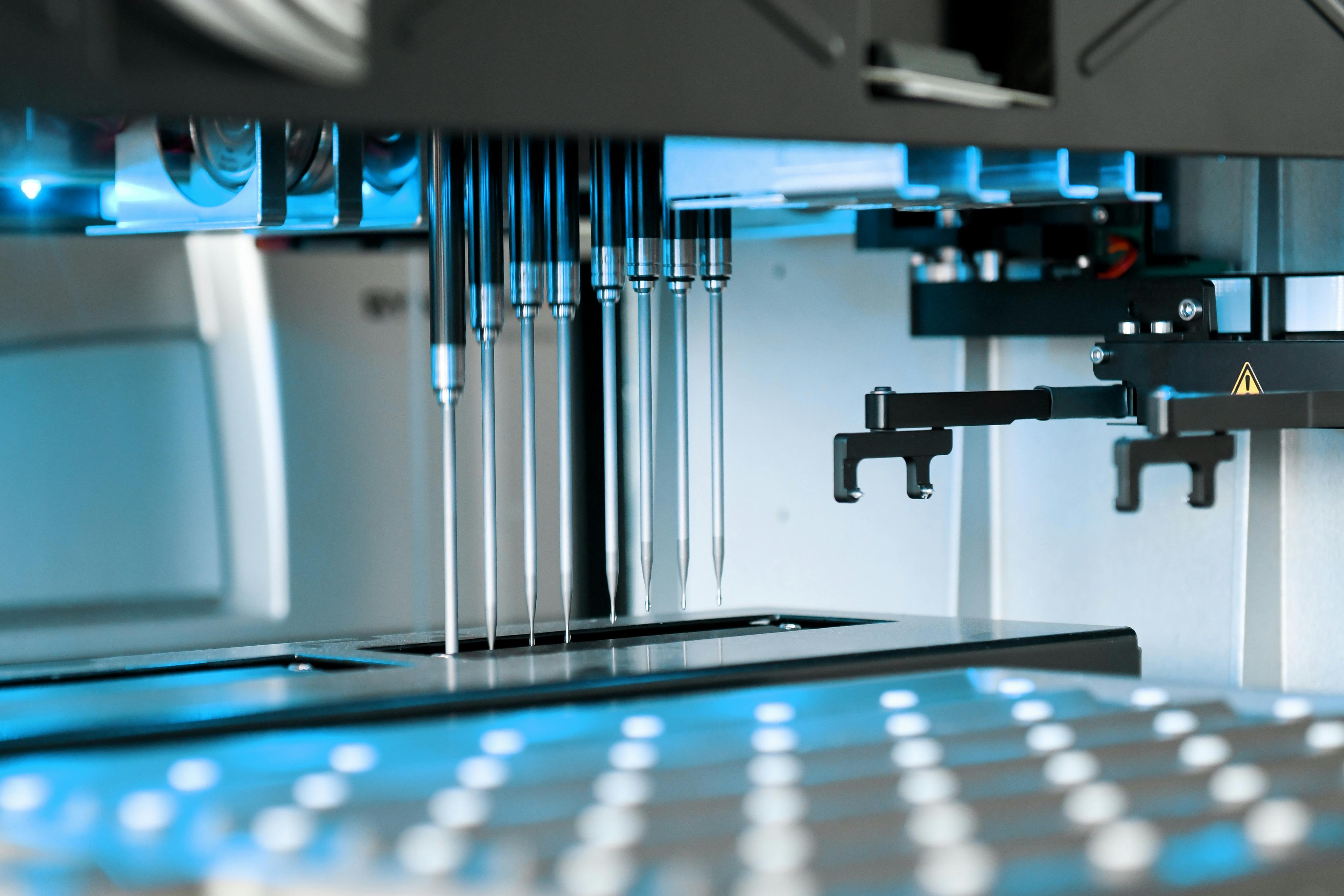
AI can design a protein before lunch. Your lab needs three months to find out if it works.
That gap is the most important number in your R&D budget, and almost nobody talks about it. We built UniteLabs to close it. So when people ask us what lab automation is, we don't start with robots.
If you're a platform leader, scientist, or lab automator, you're watching design get cheap and fast while validation stays slow and expensive. The reason isn't your science or your AI models. It's that your instruments don't talk to each other.
Let's walk through what lab automation actually is, where most of it goes wrong, and what changes when the loop between design and validation finally closes.
What Is Lab Automation?
Lab automation uses hardware and software to run lab work faster and with fewer mistakes. That can mean automating one repetitive step, like pipetting, or connecting whole workflows across sample prep, analysis, data management, and reporting.
The textbook goal is to cut errors and free scientists from manual work. True, as far as it goes. But the reason that matters now is speed of learning. Every experiment is one turn of a loop: design, run, measure, learn, design again. Automation's real payoff is how fast and how cleanly you can turn that loop.
A fully connected lab can run hundreds of experiments in parallel and feed every result straight back into the next design. Catalyst screening, candidate validation, reaction optimization, library synthesis: the work is the same, but the time from question to credible answer evaporates.
That speed is the prize. Hold onto it, because most of the industry is chasing something else.
Types of Lab Automation (and Why Most Labs are Islands)
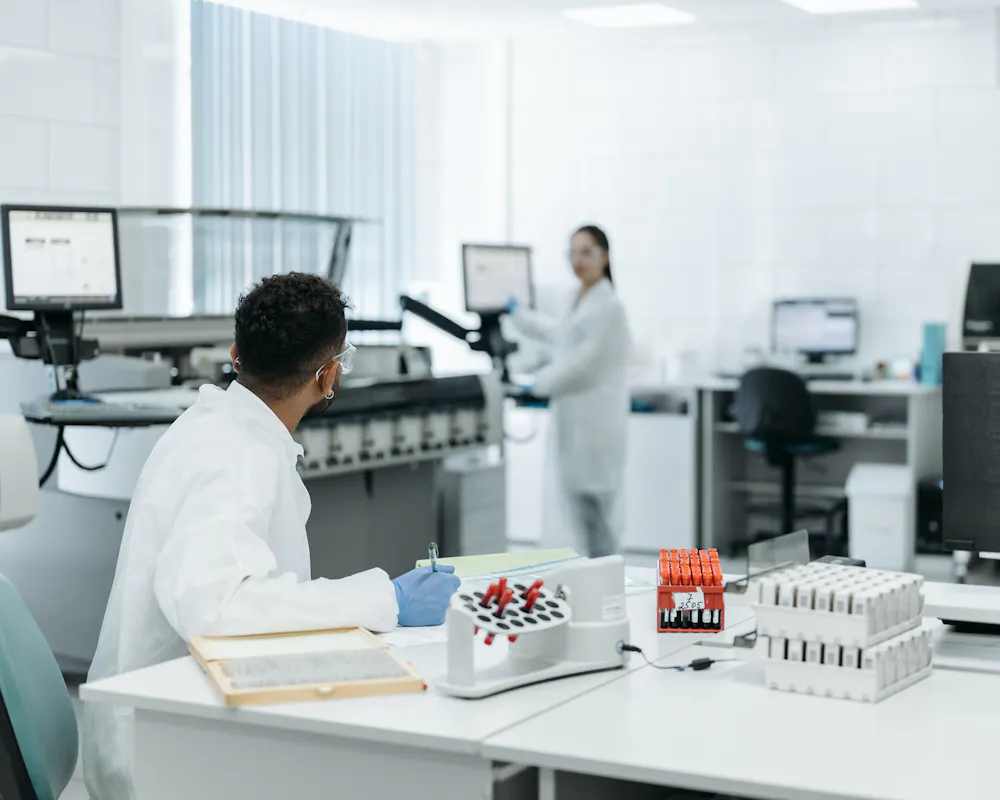
Walk into a modern biotech lab and you won't find a lack of machines. You'll find islands of automation.
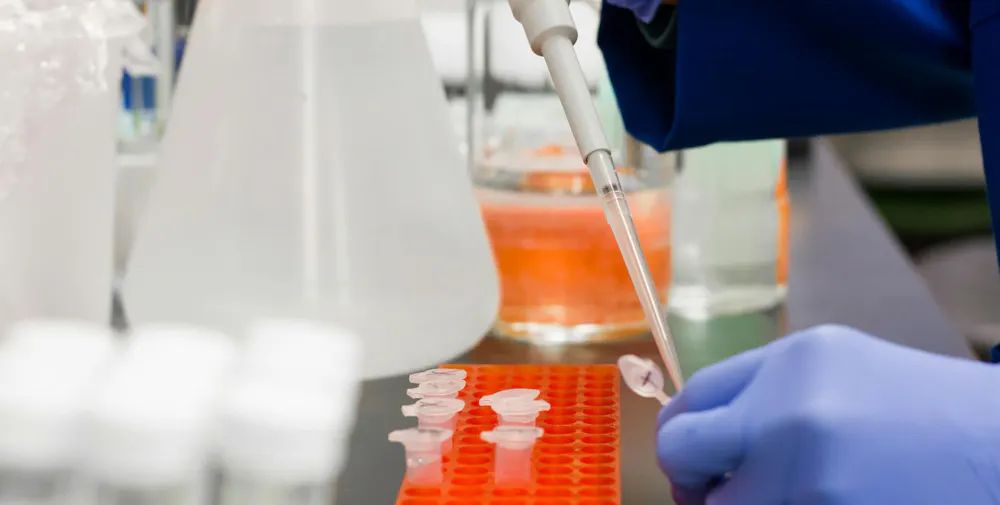
A liquid handler here. A plate reader there. A robotic arm that moves samples between two of them and nothing else. Each island is automated. None of them talk. So a human still carries data on a USB stick from one to the next, retypes it, and prays the formats match.
This is the part the sales brochures skip. The bottleneck isn't that labs haven't bought enough robots. It's that the robots they own sit on separate islands, and the cost of bridging those islands by hand eats the savings that automation was supposed to deliver.
People describe levels of automation, from manual all the way to fully autonomous, AI-driven labs. Some industry voices frame the whole future around reaching that top rung. Moving up a level does unlock real gains. But here's where we part company with the standard story.
It's worth noting that some influential industry voices talk about different levels of lab automation, from zero to fully AI-driven orchestration and autonomy. Huge gains can be made by shifting up a level, which requires an infrastructure layer to connect devices reliably and easily.
Levels of Lab Automation: Why Autonomy Is a Data Problem
The dream sold across the category is the walkaway lab: experiments that design, run, and learn from themselves with no human in the loop. Vendors will tell you that the path there requires more robots and better scheduling software.
We think that's backwards.
You don't reach autonomy by adding hardware. You reach it when every instrument on every island emits clean, traceable, machine-readable data, and when any device can be controlled from one place in code. Get that layer right and the loop closes on its own. Get it wrong and you've got a very expensive lab that still needs a human babysitting the handoffs.
A robot that can't report what it just did in a format your AI can read is not automation. It's a faster way to generate data you can't trust. And labs are already drowning in untrustworthy data: more than half of scientists can't reproduce even their own results.
So the question that decides whether your lab gets faster isn't "how many steps have we automated." It's "can a result from any instrument flow into the next decision without a human touching it." That's the layer we build.
Benefits of Lab Automation: What Closing the Loop Unlocks
When instruments connect and data flows, the benefits people usually list separately start compounding.
Throughput goes up, because systems run in parallel and don't stop overnight. Accuracy and reproducibility improve, because you've taken human transcription out of the path. Costs drop, because scientists spend their hours on experimental design instead of moving plates and cleaning spreadsheets.
The one that matters most is harder to put on a slide: every run makes the next run smarter. Clean, connected data is what your AI models actually need. A lab that produces it is a lab that learns. A lab stranded on islands just produces more work.
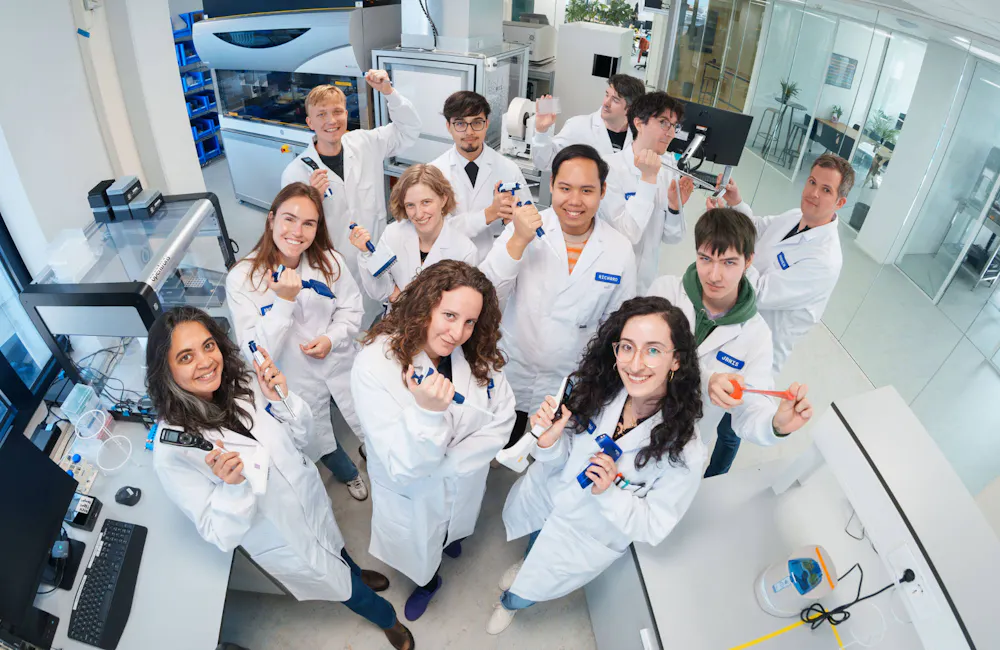
For example, Dutch-Swiss biotech Cradle quadrupled efficiency in protein candidate testing after connecting their stack with UniteLabs.
"Connecting UniteLabs with Benchling lets us iterate faster and generate high-quality data for our AI models," says Harmen van Rossum, Co-Founder of Cradle. That's the loop, in one sentence. Faster iteration, cleaner data, better next design.
Challenges of Lab Automation: The Integration Problem
Every list of automation technology looks the same. Liquid handlers, robotic arms, sample tracking, scheduling software. Buying the boxes was never the hard part.
The hard part is integration. Devices from different vendors don't connect easily, each needs its own training, and when an integration breaks, six-figure hardware sits idle while a lab leader explains to finance why the savings haven't shown up.
We take a different route: give automators the tools to connect devices and build workflows directly in Python, without voiding warranties, and without a vendor's software sitting in the middle of everything.
"We remove vendor software from the middle," says Robert Zechlin, Co-CEO of UniteLabs. "That gives customers better observability into what the instrument is actually doing, and lets you control different instruments in a consistent way."
From there, labs can build closed-loop systems that design, run, and learn from experiments with AI in support. Experiments run consistently. Change control gets real versioning in Git. Every outcome traces back to the exact configuration that produced it.
Applications Across Industries
Lab automation is transforming a variety of sectors, from biotech and pharma companies looking to accelerate drug discovery and quality control, to clinical and diagnostic companies seeking to increase testing accuracy and speed.
It also supports better environmental and food testing, enabling labs to manage high sample volumes and ensure compliance. Within chemical and industrial labs, automation can reduce risk, improve consistency, and save time.
To take one example of the latter, Matthias Pursch, a Fellow at Dow Chemical Company, recently told the Agilent Lab Automation Days event that he has seen projects with time savings of around 50% in data processing, and an 80% reduction in time spent on report generation.
Future Trends and Innovations
As more labs start leveraging automation technology, we expect to see huge strides in the coming 12 months. Emerging technologies like AI-driven experiment design, modular automation platforms, and enhanced data integration are making automation more accessible and more powerful.
Emerging trends such as collaborative robotics, intelligent workflow optimization, and tighter LIMS integration are likely to become widespread. Labs will start to accelerate their discoveries, dramatically improve data quality, and respond confidently to new challenges.
"The ultimate goal would be that we can connect all these beautiful instruments... and make them interoperable and talking to each other," says Tom Kissling, Lab Automation Partner at Roche. “I'm convinced that with the tools we have at hand and the experts we have in the field, we're able to do that soon.”
Getting Started with Lab Automation
Lab automation doesn’t always require a complete "rip-and-replace" overhaul. Many labs can begin by automating one or two of their key processes, and expand as they see positive results. The best approach will depend on your lab's specific needs, goals, and the existing technology stack.
At UniteLabs, we believe that biology is becoming software-like on the design side (AI proposes designs in hours), but remains hardware-bound on the validation side, as labs can take months to validate these designs. Why? Because devices struggle to connect.
Which is why we built a lab operating system that connects to the firmware of any device. It turns lab automation from bespoke projects into a compounding software layer, lowering the cost per decision-quality data point, and accelerating validation cycles.
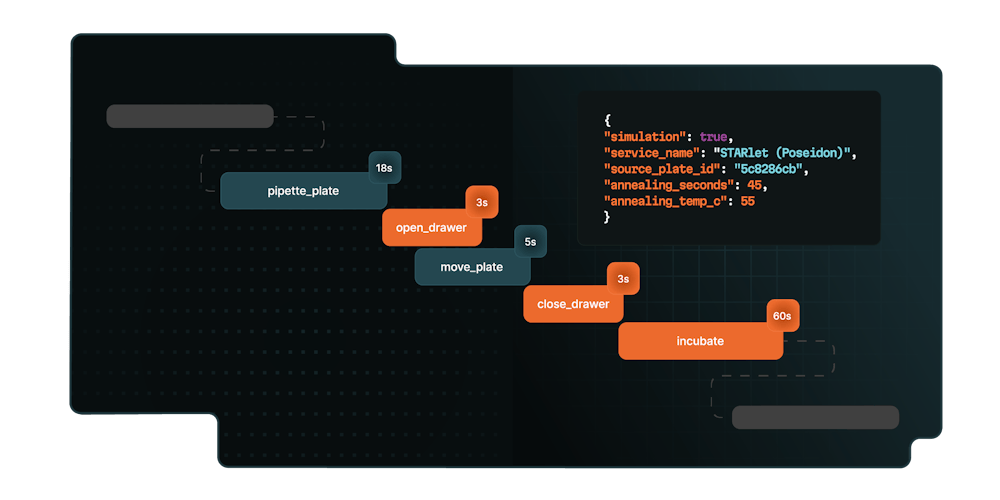
With UniteLabs, scientists can stay in their Lab Information Management System (LIMS) or Electronic Lab Notebook (ELN) of choice, as they run workflows and access experimental data. This frees them to focus on discovery and innovation.
Lab automators can get walkaway workflows running reliably, without manual data transfers, endless debugging, or black boxes. They get the toolset needed to build solid, scalable lab automation, with reusable scripts and reliable connectors.
And lab leaders can start scaling throughput, without vendor lock-in preventing them from pivoting experimental designs. AI-enabled discovery becomes realistic.
The lab of the future isn't a room full of robots. It's a loop that never stops learning. We're here to close it.
Discover UniteLabs
Want to find out more about the UniteLabs platform? Head to our Solutions Overview.
Read our latest case study to discover how biotech startup Cradle boosted lab efficiency 4x by integrating UniteLabs with Benchling to automate data and workflows.
Check out our 'Lab of the Future Manifesto' to discover our vision for the next decade, based on first-principles thinking.
Or simply book a call with one of our experts to find out how we can transform your lab!