6 Benefits of Lab Automation (and Why Most Labs Miss Out)
Lab automation promises fewer errors and higher throughput. So why do most labs still capture only a fraction of these benefits? We explain.
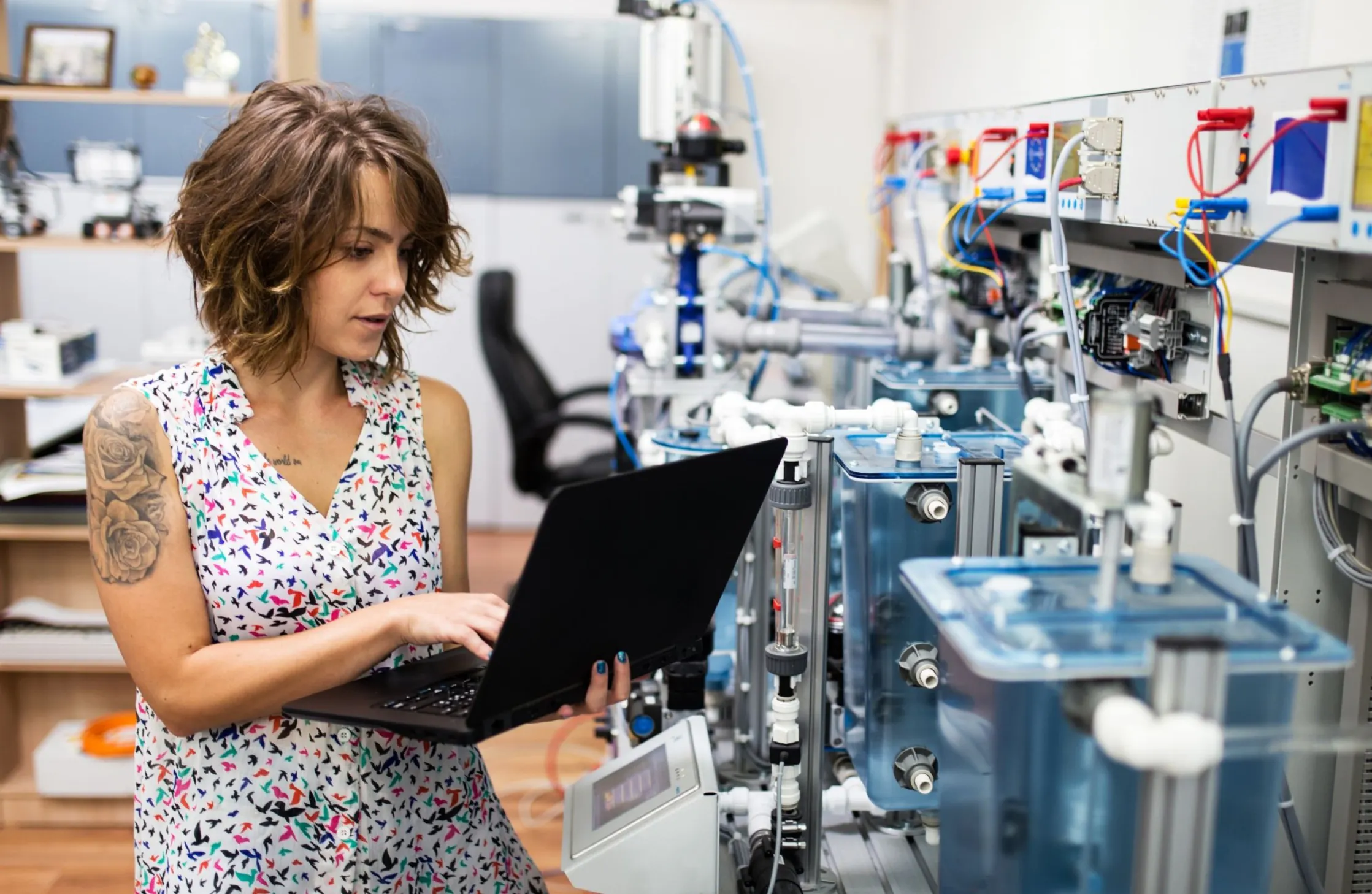
The benefits of lab automation seem clear: fewer errors, higher throughput, big cost savings. Yet most labs are still operating as “islands of automation”. Scientists are still moving data around on a USB stick.
Why? It all comes down to connectivity and shared language…
Most labs add new devices as the science requires, and each device ships with its own vendor software. Therein lies the challenge: these devices cannot talk to each other easily. So they remain siloed, dependent on a helpful human walking their data from one location to another.
The solution? API-first connectivity and instrument-agnostic automation that produces clean, machine-readable, structured data. That’s the foundation AI-driven labs need, and it will rapidly become table stakes for any lab wanting to do complex science in the near future.
At UniteLabs, we believe that the ultimate goal is to build a factory of science-ready data that becomes your competitive moat… Faster pipetting is just the cherry on top.
What Are the Benefits of Lab Automation?
Let’s recap with the big wins that lab automation can deliver (at least in theory):
Firstly, fewer errors is an appealing benefit when each lab run can cost many thousands of dollars. Somewhere between 87% and 93% of lab errors are thought to happen in the pre- and post-analytical steps of an experiment, when manual work typically happens.
Another long-run study in clinical labs found a 300-fold drop (!) in error rates over a decade, attributable to automation plus other factors like standardization, quality control rules, and better training. That’s huge.
Secondly, higher throughput becomes a reality. A major multicenter study of full automation in microbiology measured productivity gains of 18% to 93% across sites. Why the big variance? The more steps you automate, the bigger the gains.

Thirdly, scientists win more time for science with lab automation. In microbiology labs, manual pre-analytical work like specimen processing and plating consumes around a third of their time.
Automation hands that time back. One study found labs freed the equivalent of between 3.9 and 13.6 full-time employees after automating, and could move staff onto work that needs human judgment.
Fourthly, cost savings start to look significant. One site in the same multicenter study cut labor cost per specimen by 38%. And the annual labor savings across all sites ran up to millions of dollars.
Finally, human operators enjoy improved safety, as they are physically touching equipment and samples less often. For example, repetitive pipetting is a documented cause of strain injuries like carpal tunnel and tendonitis. And we’d rather a robot handle an infectious or toxic specimen than a human (sorry, robots).
Why Those Benefits Don’t Materialize In the Real World
So why are most labs leaving many of these benefits on the table? Because labs usually have devices from a range of vendors, each of which ships with its own software and “speaks” a different protocol.
This means that labs tend to end up with multiple “islands of automation”, which can’t communicate, orchestrate, or produce a stream of valuable data. This is the problem that UniteLabs solves with our Python-based approach to automation. Find out more.
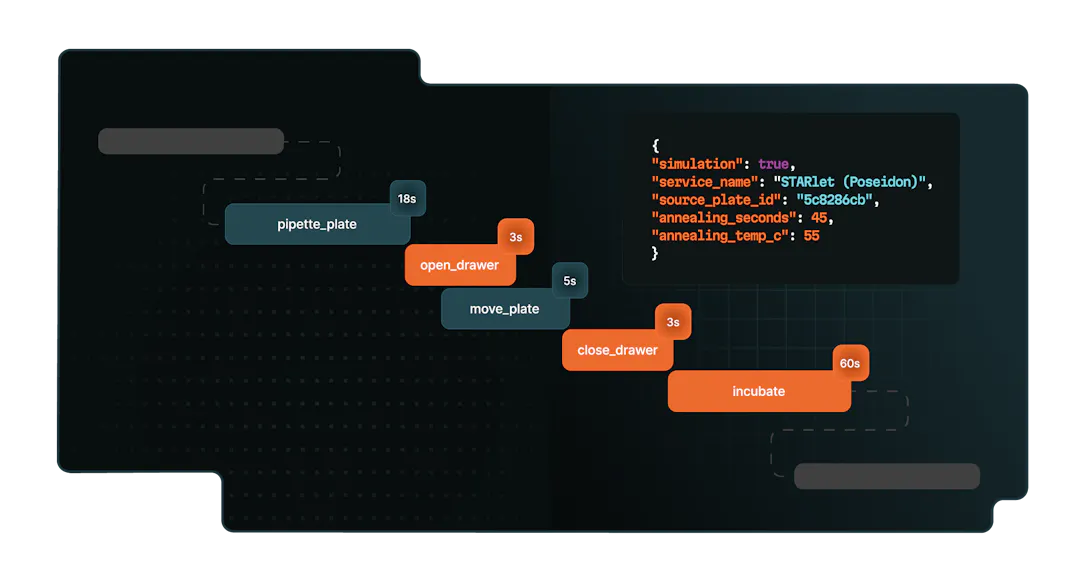
The impact on scientists and lab automators here is real: scientists spend too much time walking data from one machine to another, and lab automators are forced to write brittle workaround scripts, and act as a support hotline (because they understand the devices deeply).
Our main takeaway is this: the benefit ceiling of lab automation is determined by how well your devices talk to each other. An “automated” lab with siloed instruments only captures a small fraction of the potential you actually paid for.
We want to change that.
The “Hidden” Benefit That Hits Hardest
While faster, cheaper, safer lab research is obviously a good thing, there’s one extra benefit to lab automation that we at UniteLabs believe has an even bigger impact: reams of useful data.
API-integrated lab instruments produce clean, machine-readable, structured data at scale. This data can be piped into a LIMS, ELN, or data lake of choice, ready to go. That’s the foundation that advanced labs are buying today to deliver the discoveries of tomorrow.
"We remove vendor software from the middle," says Robert Zechlin, Co-CEO of UniteLabs. "That gives customers better observability into what the instrument is actually doing, and makes it possible to control different instruments in a more consistent way."
We’re already talking to many of these labs, and we see the same goal crop up time and again: they tell us that they want to close the loop and build a “factory” of science-ready data, with full context and sample lineage.
They’re betting this becomes their defensible moat and frees up their scientists and lab automators to focus on the work they actually signed up for.
Discover UniteLabs
Want to find out more about the UniteLabs platform? Head to our Solutions Overview.
Read our latest case study to discover how biotech startup Cradle boosted lab efficiency 4x by integrating UniteLabs with Benchling to automate data and workflows.
Check out our 'Lab of the Future Manifesto' to discover our vision for the next decade, based on first-principles thinking.
Or simply book a call with one of our experts to find out how we can transform your lab!