We Built a Cell Culture Workcell in Two Days. Here's How
They said it can’t be done. “Hold my beer,” replied the UniteLabs team, and assembled in our Munich HQ for a high-energy, pizza-fuelled buildathon across Science, Automation, and Product tasks.
Some lab automation challenges won’t run against a fixed schedule. Case in point: cell culture. Each sample needs feeding on its own clock, and cannot be rushed nor delayed.
It’s a beautiful reflection of life in miniature… But also a big challenge for scientists and lab automators. Especially when you try to run several plates at once through the same workcell, each on its own cadence and competing for shared resources like a liquid handler or plate reader.
At UniteLabs, we’ve had this conversation so many times recently, been asked by biotechs to help solve lab automation problems where the schedule isn’t fixed and the science is complex.
So our founders Robert, Lukas, and Julian set the whole company a summer challenge: build a running cell culture workcell in two days. All hands on deck, pulling in our device connectors, platform infrastructure, product, and deployment skills to combined effect.
Pre-Buildathon Prep Work
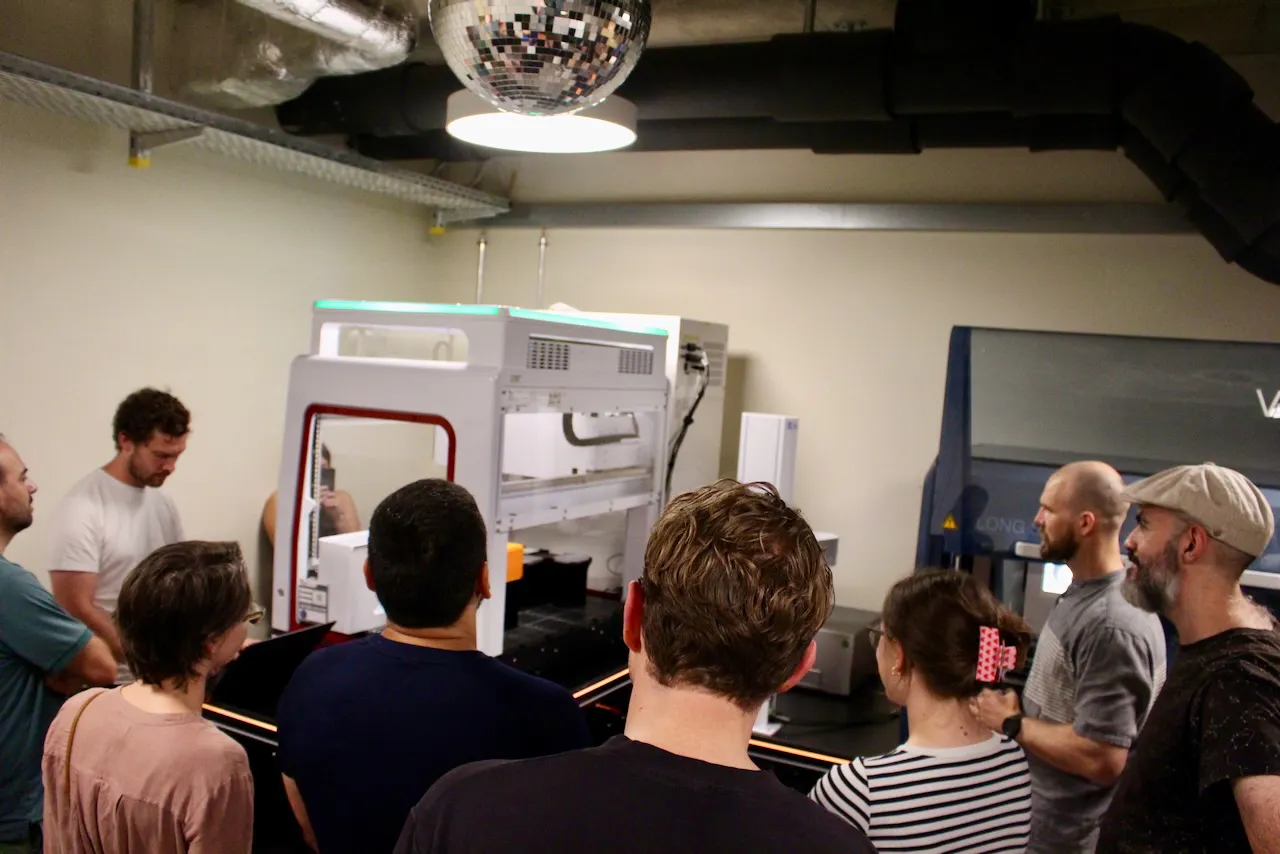
The buildathon was set for 26-27th August, 2026, in our Munich HQ. Meetings (and pizza) would happen upstairs, and workcell construction would be done downstairs in our Party Lab, where we do device testing and integration.
Fun fact: the disco ball also works. Sometimes.
Remote colleagues came for the week, flying in from the UK, Sweden, and elsewhere in Germany. While most of the UniteLabs team lives in Munich, we wanted everyone to be there.

A Slack channel was set up, planning documents were distributed, and three teams assembled: Science, Automation, and Product. Each team had a mix of specialists deeply familiar with the work, and colleagues there to learn new skills from them, like writing workflows, hooking up lab devices, and more.
“Such a build usually takes several weeks to months,” said Robert Zechlin, Co-CEO. “So doing all of this in two days is obviously a big challenge, but we have a team onsite with all the different skills and resources to do it.
"Cell culture by nature is something where you have to do a lot of compute, a lot of scheduling of the different plates that run through the workcell.”
Dr. Lukas Bromig, Co-CEO, added: “We have the challenge that we're not building and planning this way ahead, typically you start months before that, you start designing the tables specifically for your application. We don’t have that luxury here.”
Despite these challenges, the team seemed confident. How long would that last? Let’s find out…
Buildathon Day 1: Planning
On the morning of 26th August, everyone started arriving at HQ. Banter began, and we gathered together for a big breakfast, prepared by the ops team. Office dog Mickey scrounged for scraps.
Then the real work began… Our objectives were twofold: design the user experience that a scientist would actually touch, and build what happens behind it to run a cell culture workcell, on real devices.
But safety first, as Mathew Keegan, our Director of the Connector Factory, briefed everyone on the very real dangers of using autonomous lab robots in confined spaces:
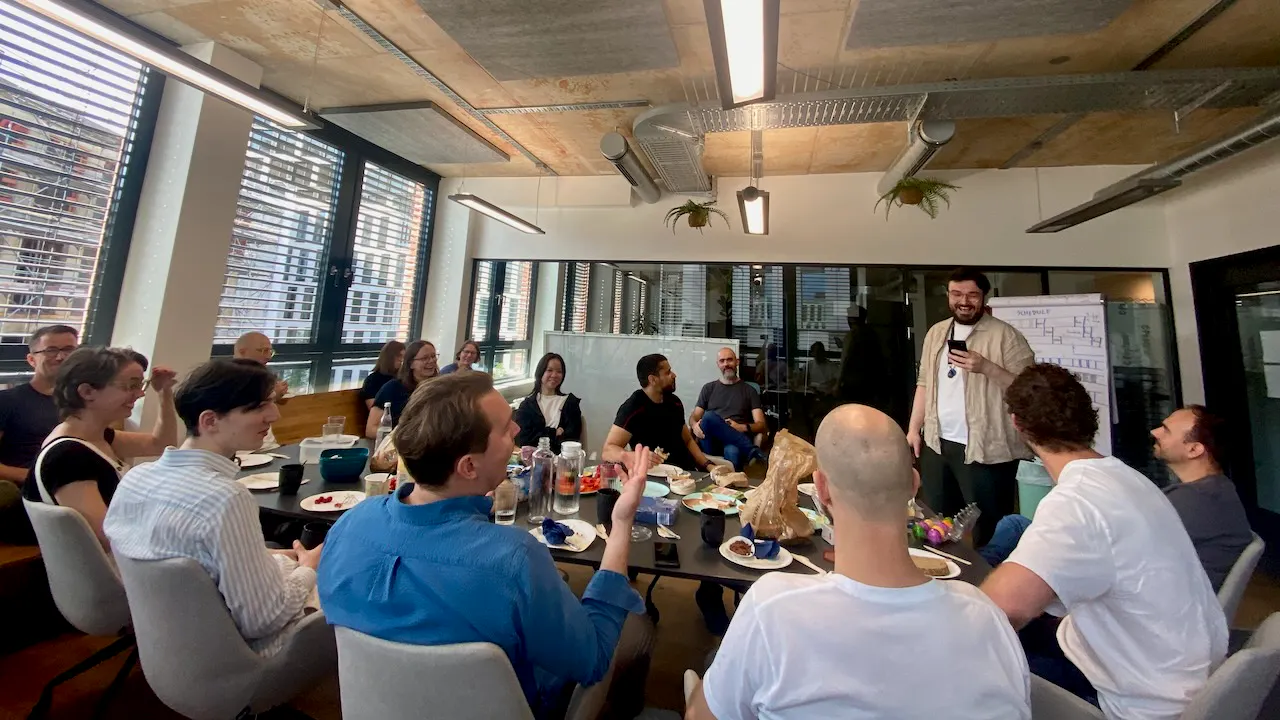
“The big challenge that I expect over the next couple of days is that a lot of the team here have not done physical integration of devices,” said Mathew. “There will be some heavy lifting, some electrical work, some networking, and especially with robots it can be a game of millimeters.”
Then came some words on the sweet science of scheduling, from Dr. Klara Malinowska, our Scientific Solution Architect:
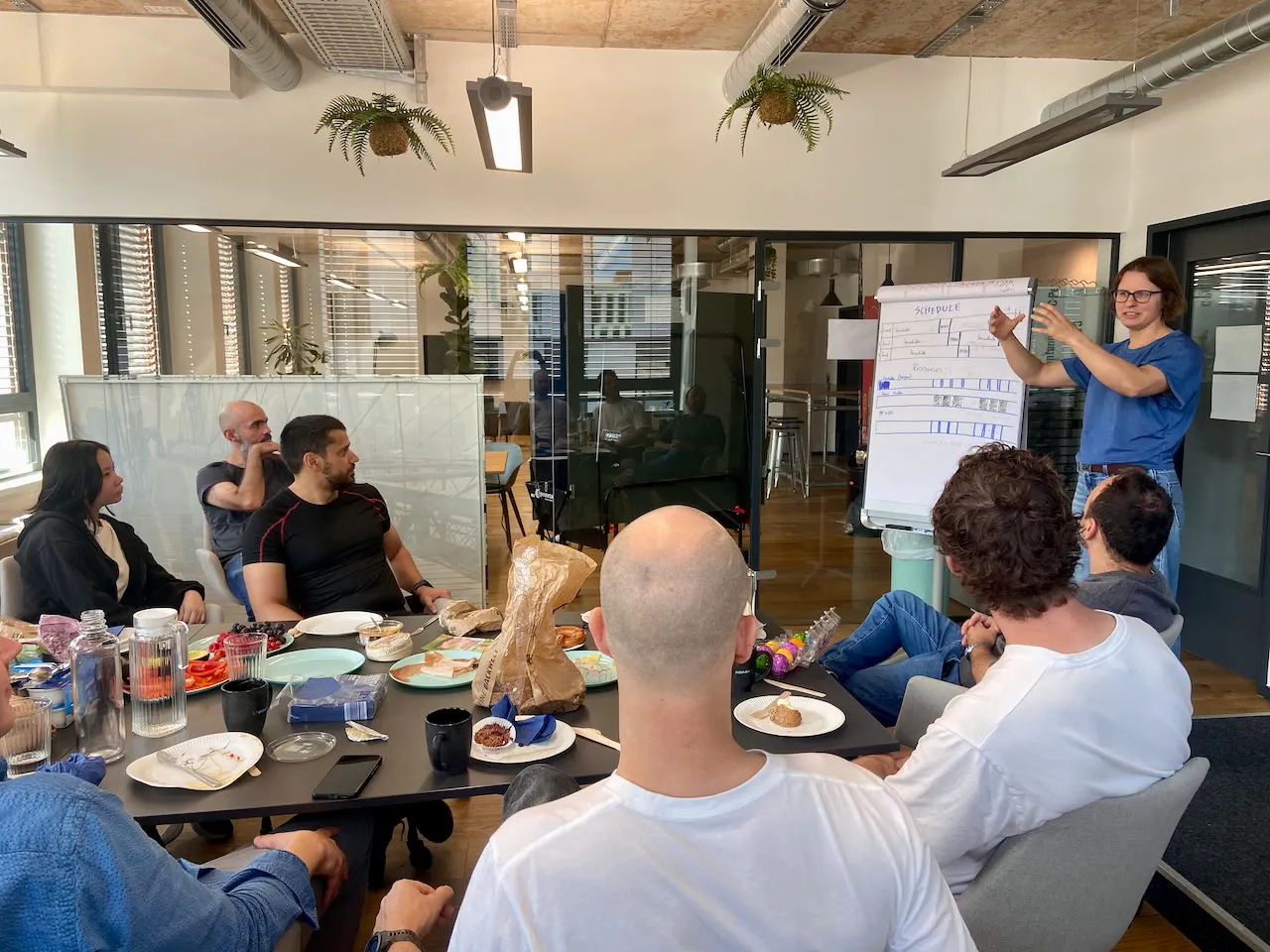
“Our goal is to put ourselves in the shoes of our customers, specify a realistic workcell workflow, and write it in a way that the other teams can create a fully functional automation,” said Klara.
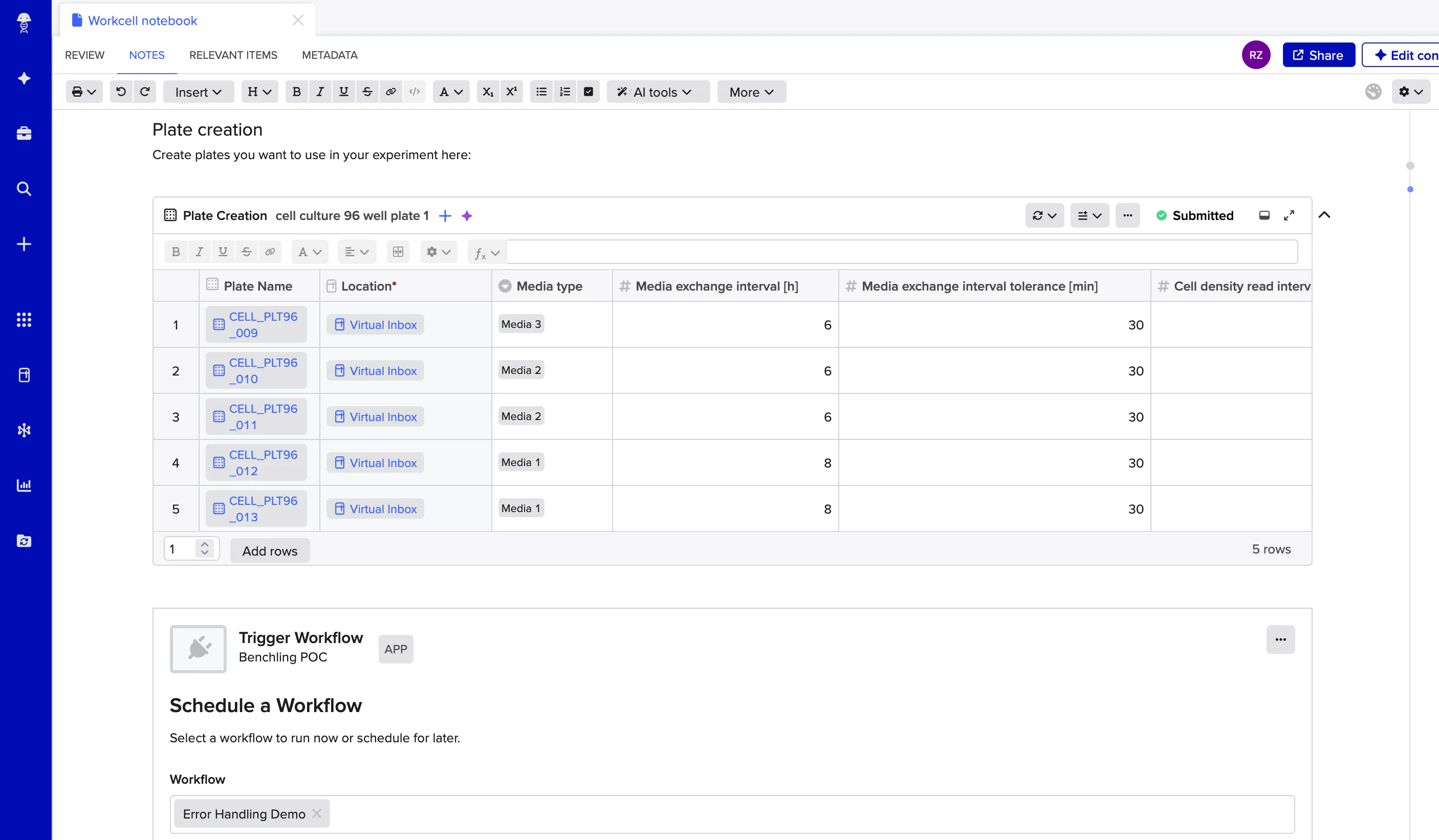
We decided that the front door to everything would be Benchling, a Lab Information Management System (LIMS) that many lab scientists are familiar with. This is where they start the run, and get the results back as they're measured. No engineer in the loop.
This is also where a scientist defines the cell culture experiment they want: the plate barcodes, media type, feed interval and tolerance, read interval, the density threshold that triggers a split, the sample volume, what percentage of each well to exchange, etc.
When it came to scheduling rules, Klara was clear: feeding takes priority. A delayed measurement can often be rescheduled, but a delayed feed will affect culture health and data quality. If a feed falls outside its allowed window, the system flags the plate for review.
This is where UniteLabs stands out: the workcell we built can read a measurement, apply a defined rule to trigger passaging, then schedule the required steps, and keep every other plate on cadence, all without manual coordination.
Over the course of Day 1, we aligned on the following devices for the workcell:
- Liquid handler: Beckman Biomek i5
- Robot arm: Brooks PreciseFlex 400 (PF400)
- Incubator: LiCONiC STX110
- Plate reader: Tecan Infinite M200
All equipment would be set up in our Party Lab, with Mathew overseeing the final build.
We also wanted to include a second liquid handler (a Hamilton Vantage), and a microplate shaker (a QINSTRUMENTS BioShake 3000 elm), but we ran out of time to include these in the completed build.
Sidenote: UniteLabs doesn’t sell any of these instruments. We enjoy broad vendor support and don’t infringe any warranties, but we are totally device-agnostic.
Driving all this equipment would be six Python workflows: media exchange, cell density read, plate split, incubator inventory scan, retrieve-and-reintroduce for off-cell work, and plate done.
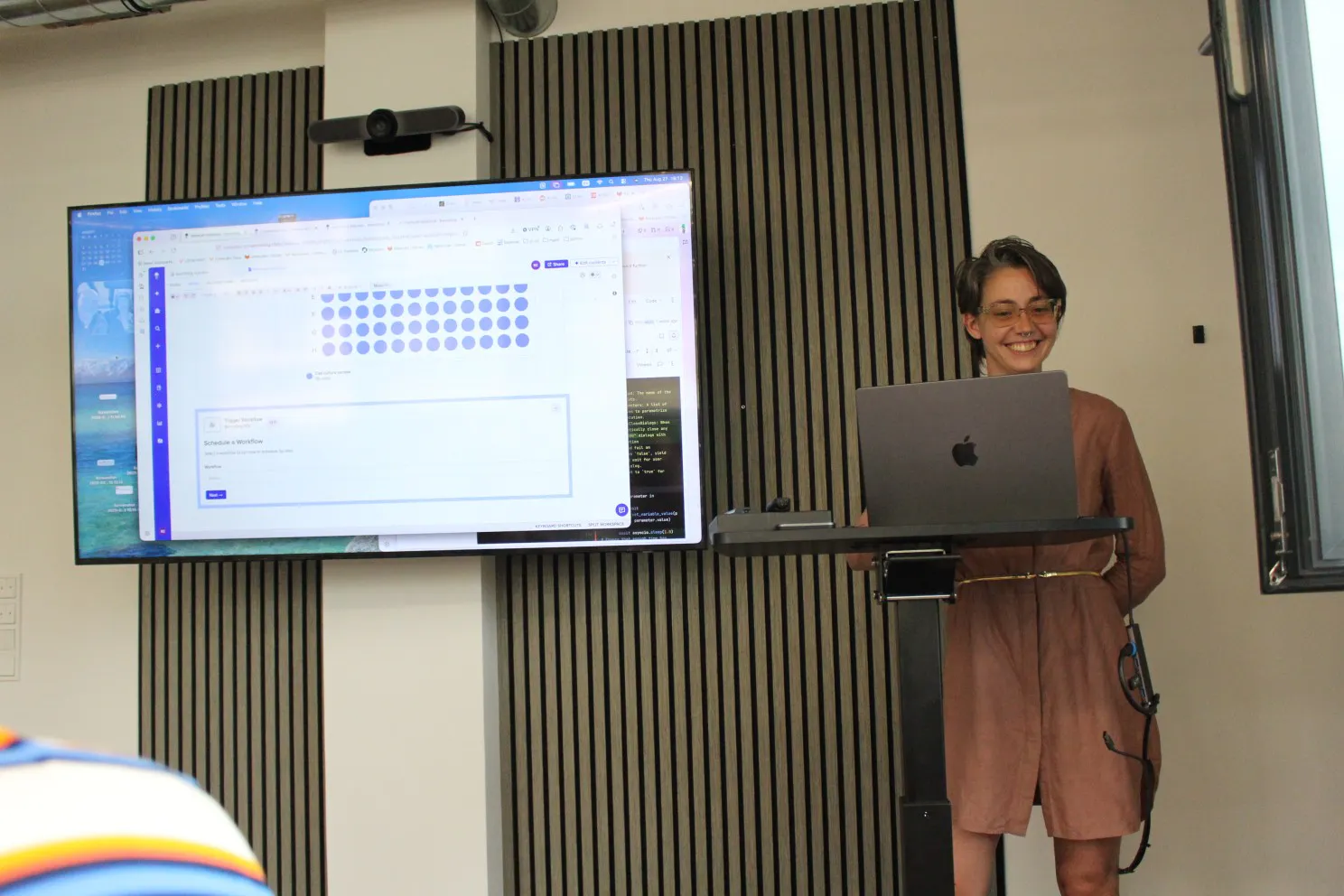
Of course, the Automation team had the task of writing, reviewing, and testing these workflows. “If we hit major hiccups with the physical setup, then that has downstream effects that will ripple out,” said Desi Davison, our Tech Lead for Integration Engineering.
“So we need to be flexible enough to adjust. But I’m excited. Let the work begin!”
Buildathon Day 2: Execution
In the morning of Day 2, we gathered again for breakfast. As a collective, we had to be realistic about what we could actually achieve with the time available, and resolve some open topics.
So we committed to using dyed water in place of live cells, with fluorescence measurements used as a proxy for cell density, as our Party Lab is not a biologics-designated site, with the extra steps that involves.
We also realized that a closed-loop workcell was beyond the scope of this buildathon. So this will be done in the coming days by our team, along with empowering a non-technical user to start the workflow within 10 minutes, based on the documentation alone.
Here’s what happened next…
The Science and Product teams built a Benchling interface for users where they could design an experiment, set parameters, trigger a workcell run, and get the results back:
Alongside the Benchling interface, another cross-functional team designed the scheduling logic behind the experiment. Product experts shaped the scheduler, Science defined the biological timing and priorities, and Automation determined what the devices and platform could execute:
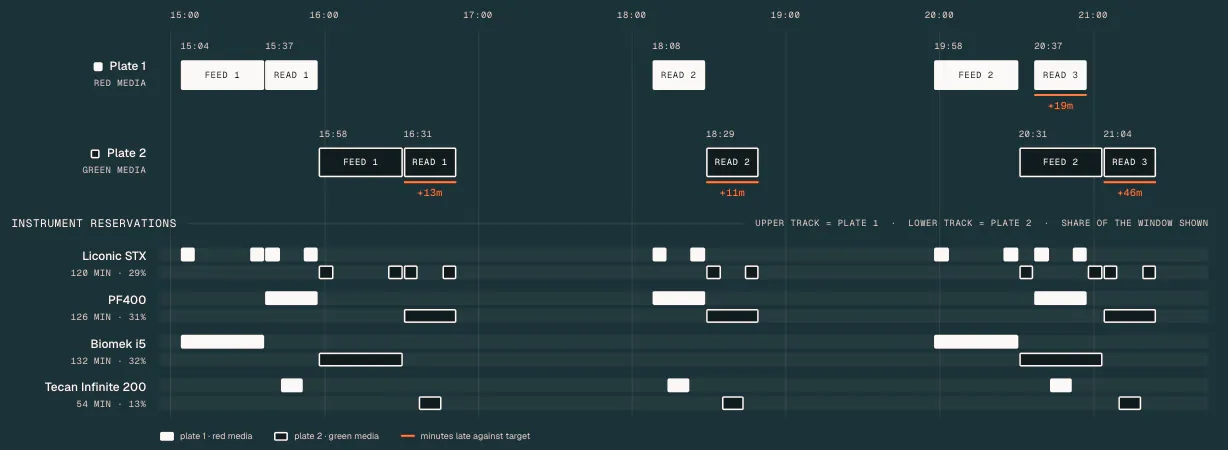
The team designed scheduling logic to keep each plate on its own timetable, prioritize feeding, and trigger a split when a reading crossed the defined threshold. Implementing this logic end to end remains a next step.
During the buildathon, we mapped the experiment into workflows, phases, and steps, including their timing, priorities, and instrument requirements: everything our scheduling and sequencing engine will use. All workflows are coded on open SiLA standards, see our docs.
The Automation team meanwhile got busy building the workflows behind it all, starting with a single Feeding Phase:
- LiCONiC incubator opens the tray and exposes a plate.
- PF400 lifts the plate from the Incubator, and moves it to the Biomek i5 liquid handler.
- Biomek delids, then moves the plate, and runs a series of dispenses, including tips cleanup.
- Biomek liquid handler puts the plate back onto the shared nest.
- PF400 robot arm takes the plate from the Biomek i5, and places it back into the LiCONiC.
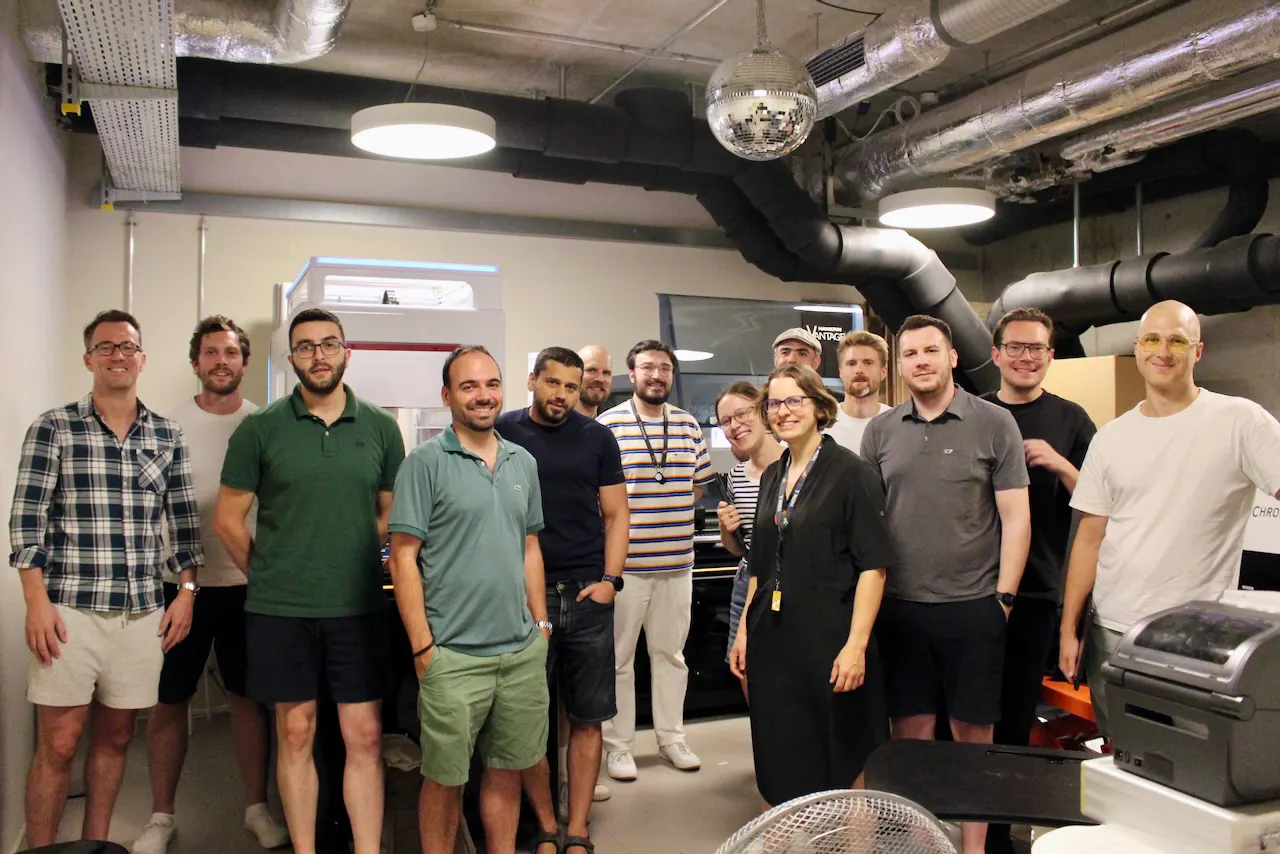
So how did our buildathon go? “Well, I think it was awesome,” said Robert afterwards. “The whole team came together, we built on all different sides of the product in our building, we set up a whole new workcell, we hooked up devices, and we got our robots moving.
“We built a whole new notation for how we describe workflows that now feeds into our automation engine. It schedules and sequences workflows, and really orchestrates the whole system. That's really awesome.”
Job done, we went for a cold beer together:

Our Next Steps
Over two days, the team self-organized to assemble and connect a cell-culture demo workcell, build a Benchling interface for configuring and triggering workflows, and run an automated feeding phase with dyed liquid across the incubator, robot arm, and liquid handler. That’s already a significant achievement.
The next step will be to demonstrate the full closed-loop scheduler across multiple plates, using the robot arm, incubator, and liquid handler, plus dynamic read-triggered rescheduling.
And if you want to book a demo of our cell culture workcell, go here.