End Times Are Nigh for the ‘Fragmentation Tax’
Automation leads at Roche, Bayer, and Novo Nordisk just called for open APIs and open standards on all new lab instruments by 2027. Here's what that means in practice, and why we agree.

By 2027, many of the biggest pharma, biotech, and research organizations will require open APIs on their lab devices. They’re tired of the “fragmentation tax”, and so are we.
As shared last week, lab automation leads at Roche, Bayer, Takeda, BioNTech, Lonza, Novo Nordisk, and the Botnar Institute have just signed a Letter of Intent requiring open connectivity for all new hardware procurement agreements.
They decry the hidden cost that labs must pay because their instruments don’t speak a common language. They call this cost a “fragmentation tax” because it recurs with each new device integration, firmware update, or vendor swap. We couldn't agree more.
This fresh push is good news for the whole industry: native SiLA 2 and OPC UA LADS support on the device, fully documented public APIs, no recurring connectivity fees. All happening soon.
We Believe in Open Standards
As a supporter of both standards and a core maintainer of SiLA 2, UniteLabs is uniquely placed to help make this a reality. Our co-founders Lukas Bromig, Robert Zechlin, and Julian Willand built this company on the idea that a connected lab should (and will) run on open standards.
Vendor-neutral instrument connectivity is our whole product. We sell no hardware, so we have no reason to keep instruments closed. To put it bluntly, if a vendor sells robots, their “open” platform is really a sales funnel.
Our open-source Connector Development Kit (CDK) is a deliberate attempt to drive change, by giving the industry the tools needed to create and maintain standardized connectors for lab devices.
In order for vendors to hit the “compliant by 2027” mandate, they must adopt open standards. The design of a standard matters because the tooling follows from it.
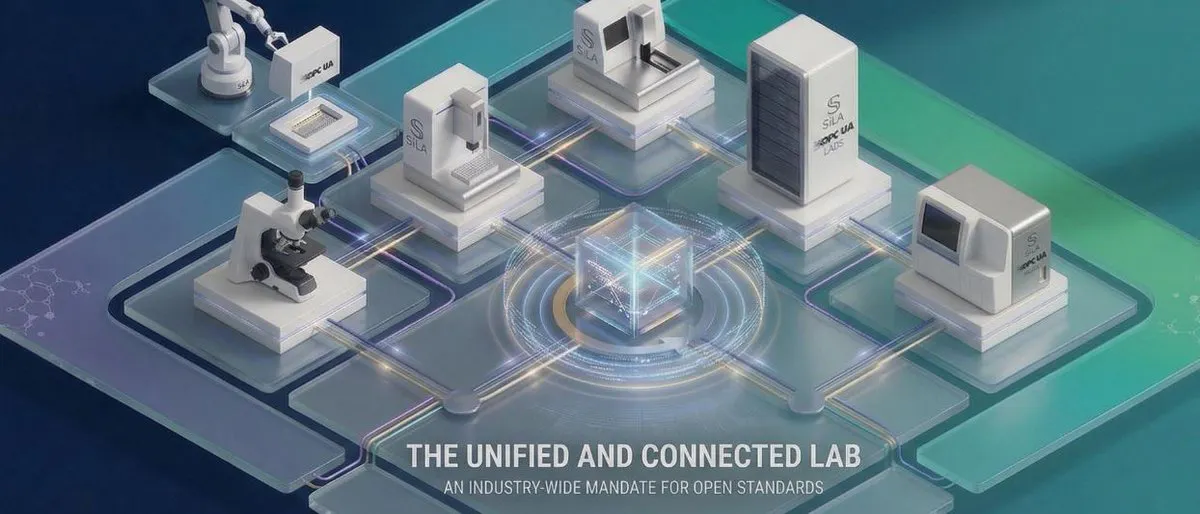
A Closer Look at SiLA 2
A SiLA 2 server describes its own interface. Introspection means a client reads the device's features, constraints, and units, then generates itself against them. No more custom-built drivers per instrument.
Constraints and units live in the interface, so internal validation prevents a malformed command from ever being created, let alone being sent. And that same metadata is what makes results traceable back to the instrument that produced them.
It uses a server-client architecture, so instruments run as independent nodes, distributed, instead of being tied to single Windows desktop computer. The best part: the server can open the connection outward, which we lean on heavily, because it means setup survives a segmented enterprise network without a week of IT tickets.
Here’s what we’ve built on top of that:
→ We ship the only standard-compliant Python server and client, plus a JavaScript client for web apps.
→ The SiLA Interoperability suite runs cross-language, so any implementation proves it's compliant instead of claiming it.
→ Our Connector Development Kit (CDK) is the best and most mature framework for building best-in-class connectors, and it’s where we ship the abstractions and best practices vendors would otherwise reinvent alone. It is a part of our internal stack, refined every day.
→ Coming soon: the SiLA AI Feature Generator, built by SiLA and us, so the community designs features to spec.
We also sit between the standard and the vendors adopting it. We give feedback on interface design, we're usually the ones pushing for the standard in the first place, and we bring early customers in as beta testers to shorten the loop from draft to working connector.
The Times They Are A-Changin'
This isn't theory. Our CDK is already used at Novo Nordisk, J&J, DKMS, and Roche, alongside labs from Argonne, TU Munich and many, many more. It was used recently in a hackathon hosted in Toronto by the Acceleration Consortium:
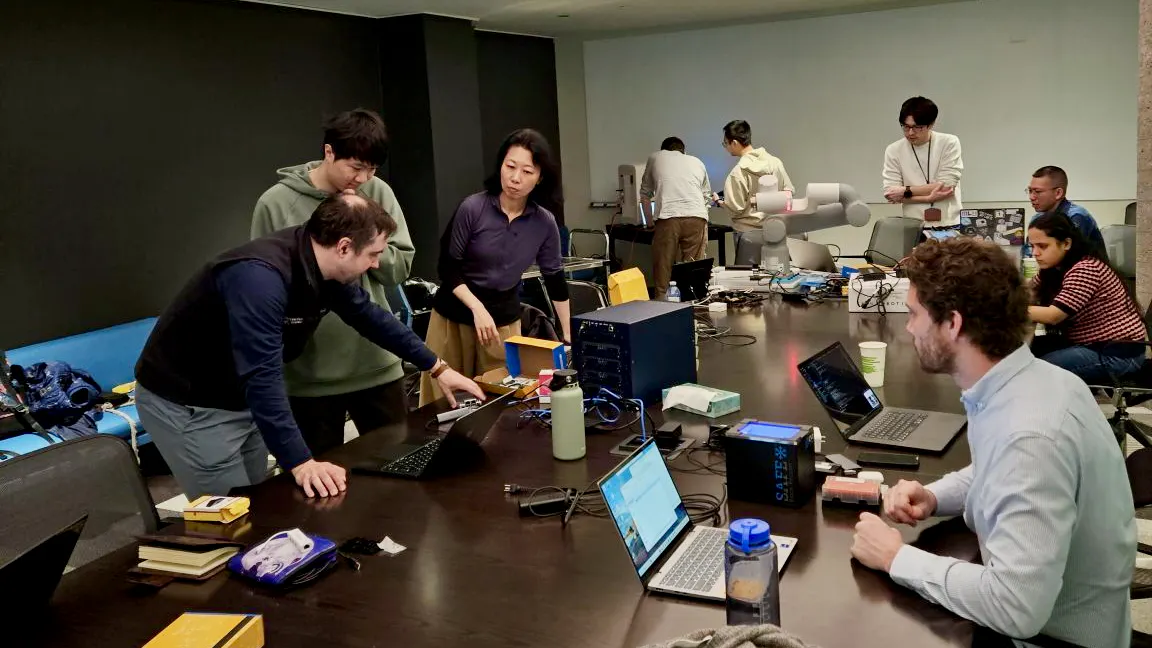
In October, we’re hosting a hackathon in our Munich office as part of a global event where hundreds of lab automators around the world will integrate real devices using our CDK (register to attend here).
So if you're signing an instrument PO this year, first ask yourself: can this box expose a documented, introspectable API on the device, and dial out into your network, by 2027?
If it can’t, make sure to add the invisible fragmentation tax to the quote.
Discover UniteLabs
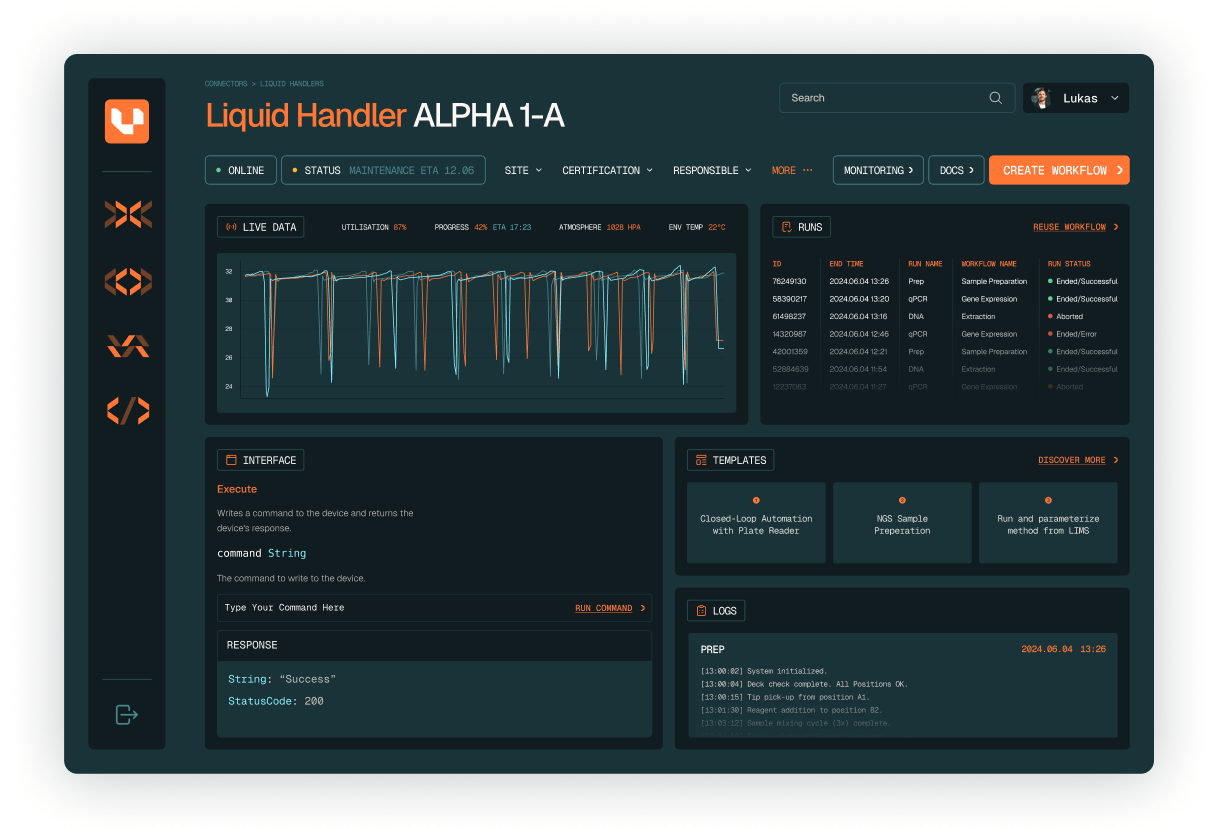
Want to find out more about the UniteLabs platform? Head to our Solutions Overview.
Read our latest case study to discover how biotech startup Cradle boosted lab efficiency 4x by integrating UniteLabs with Benchling to automate data and workflows.
Check out our 'Lab of the Future Manifesto' to discover our vision for the next decade, based on first-principles thinking.
If you're a lab automator looking to level up your skills, check out the UniteLabs University.
Or simply book a call with one of our experts to find out how we can transform your lab!